AAC Choice Boards: A Visual Choices App
An AAC choice board is a set of two or more pictures a child points to or taps to say what they want. It is one of the simplest forms of AAC, and a common first step for beginning communicators. MyVisualRoutine lets you build one in a minute, with your own photos and your own recorded voice.


Free to start. Optional Premium upgrade. No account needed. Data stays on your device.
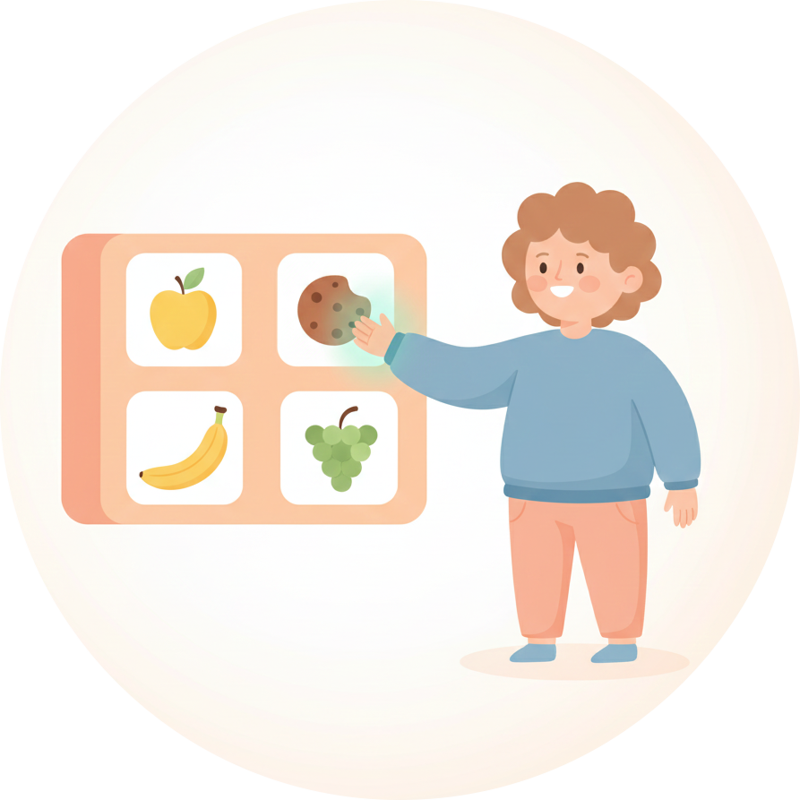
How do I make a choice board in the app?
Four steps. Most boards take about a minute.
- 1
Open the Boards tab and add a choice board
Start a new choice board and give it a name such as "Snack".
- 2
Add two options
Pick a picture symbol or take a photo of the real item for each option, and add a short label.
- 3
Optionally record your voice
Record yourself saying each option so the app can say it when it is chosen. This is part of Premium.
- 4
Hand over the device
The board opens full screen. Your child taps a picture and the choice is shown back to them.
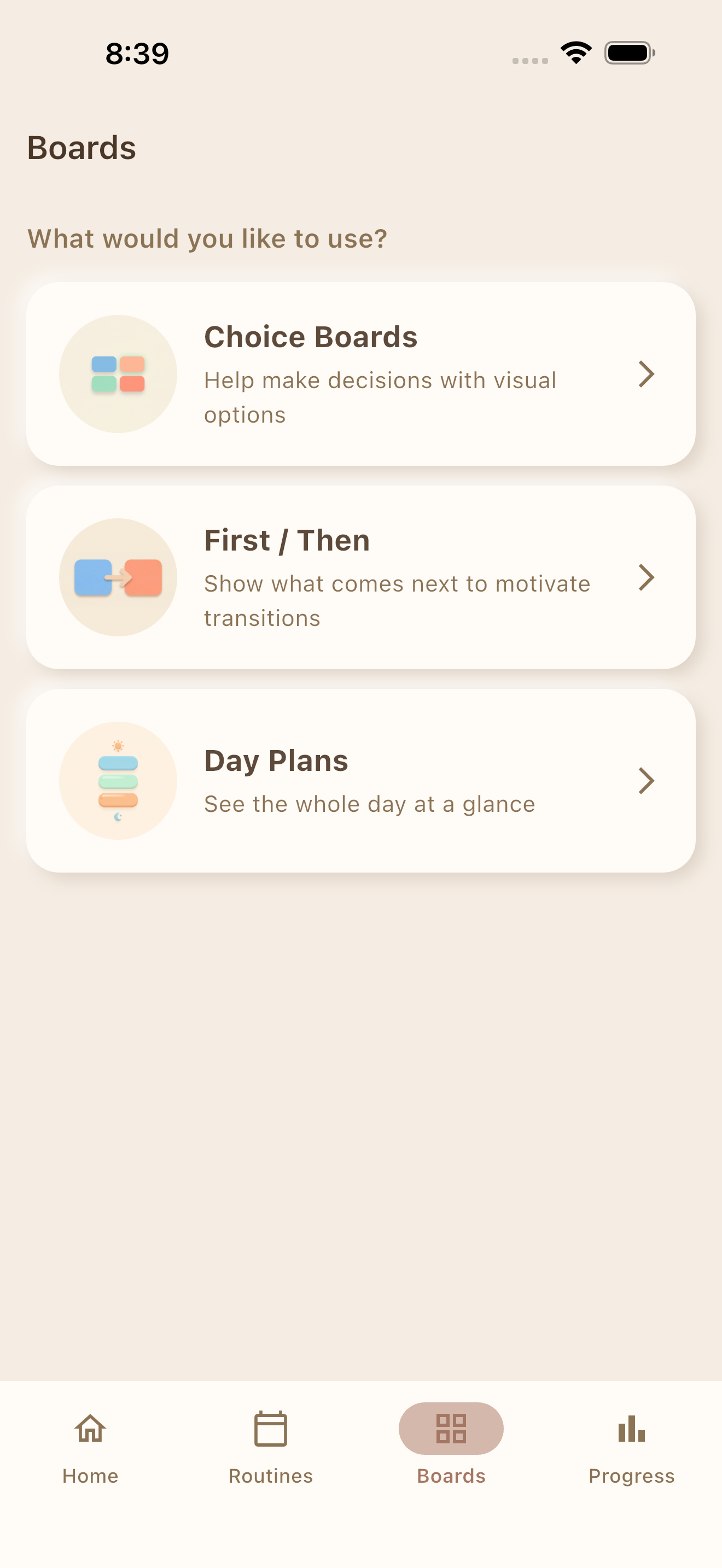
Boards hub
Choice boards and First/Then boards live in one place
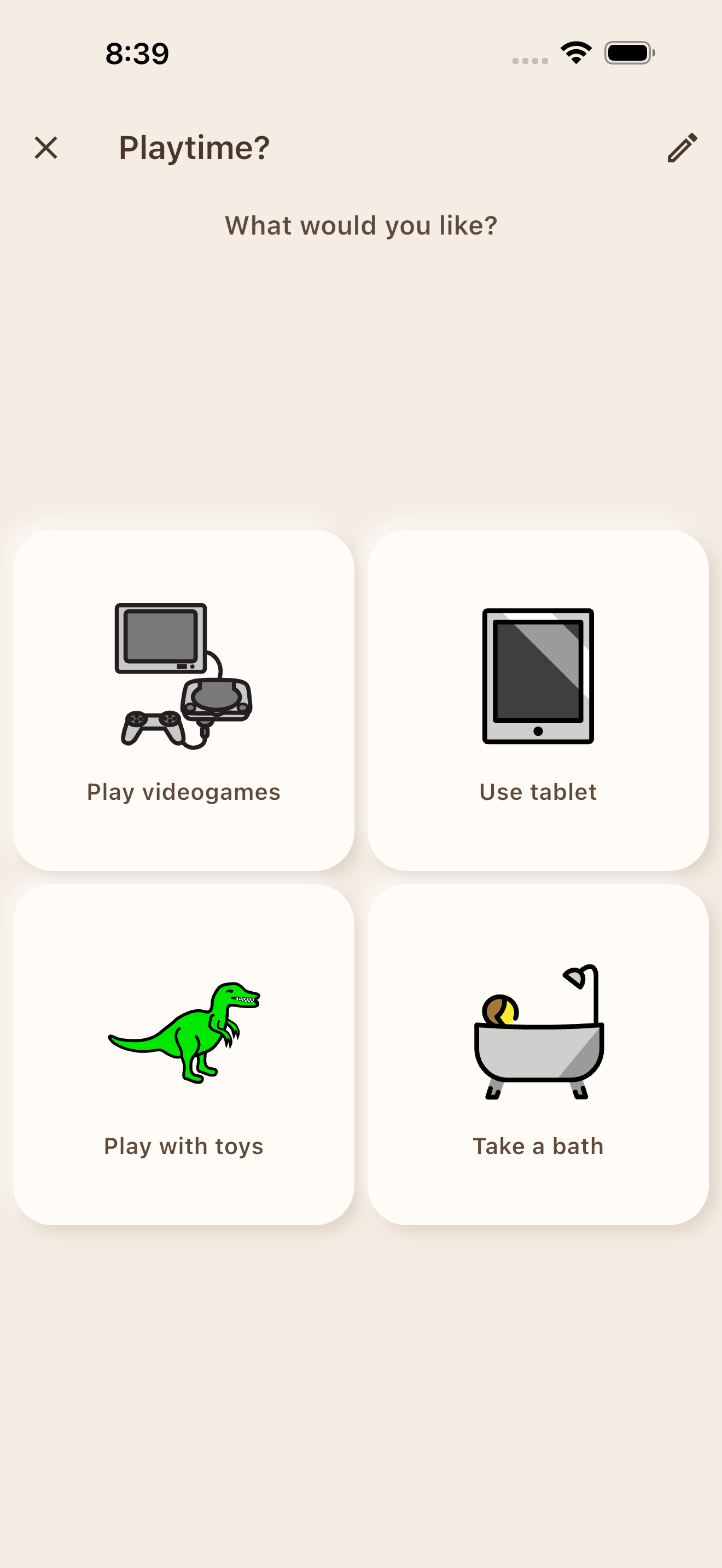
Full-screen board
Large pictures, nothing else competing for attention
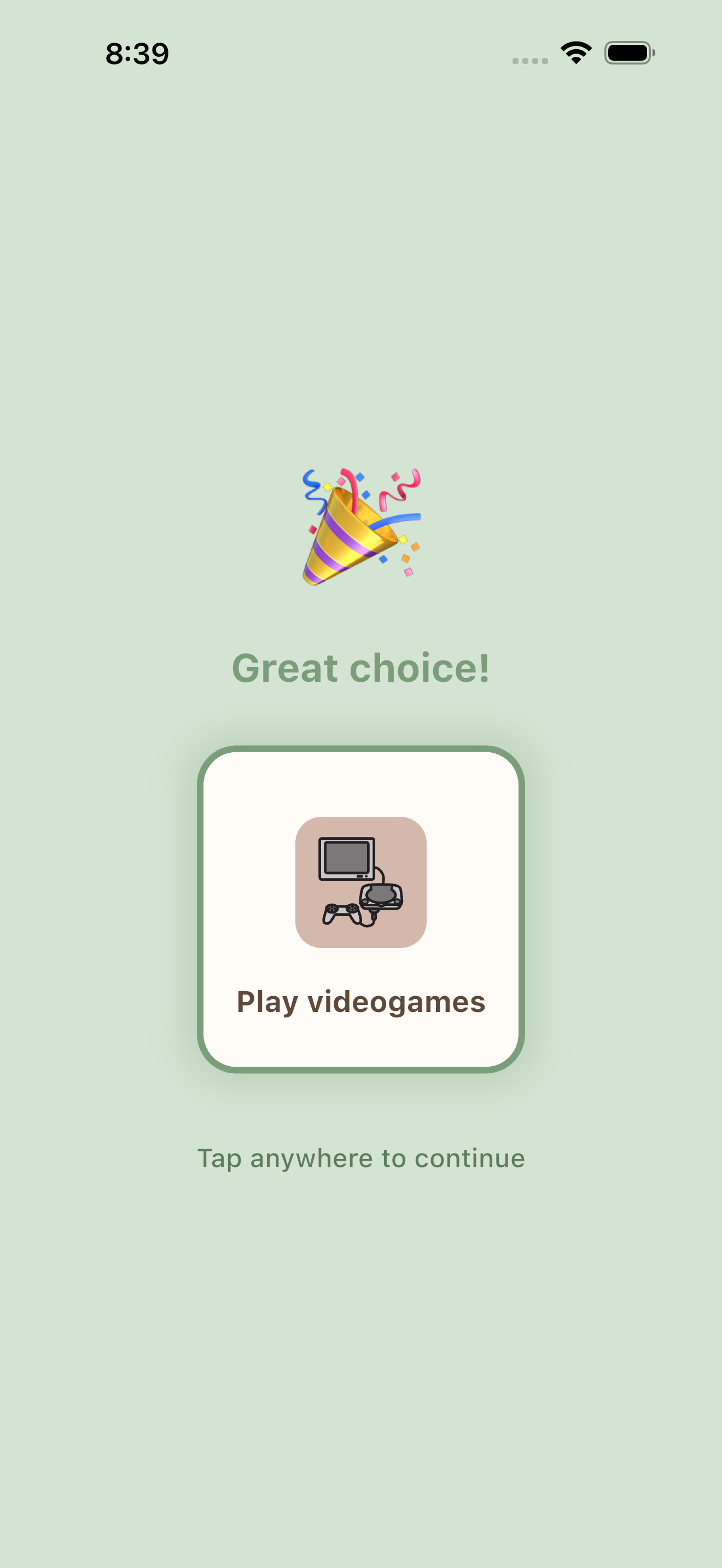
Choice shown back
The picked option is confirmed on screen
How many choices should a board have?
Start with two. Speech and language guidance from the NHS is to offer a choice of two, then add pictures gradually. A board in the app holds 2 to 6 options.
| Board size | Good for | Example |
|---|---|---|
| 2 choices | Starting out, or a child who is overwhelmed by choosing | Crackers or apple? |
| 3 to 4 choices | Once the child picks on purpose and reliably | Park, playground or bikes? |
| 5 to 6 choices | Confident choosers, or a board shared across a whole activity | Free-time menu |
Model the board first: point to a picture, say its name, hand over the item. Looking, pointing or saying the word all count as a choice.
More setup tips and common mistakes are in our choice board guide for autism .
Is a choice board enough for AAC?
Usually not on its own. ASHA lists picture communication boards as one kind of low-tech AAC and says speech-language pathologists play a central role in assessing who needs AAC. Choice boards cover requests. They do not give a child words for commenting, asking or sharing news.
PrAACtical AAC suggests pairing a choice board with a core word board so language can keep growing. MyVisualRoutine is a visual support, not a full AAC system. Use it next to whatever your speech-language pathologist recommends.
Choice board or First/Then board?
Choice board
Your child picks between options. Use it for snacks, activities and rewards.
First/Then board
Shows one task followed by one thing to look forward to. Use it for getting through something less fun.
See First/Then boardsThey work well together: a choice board can pick the "then". For the full day, see visual schedules.
What is in a MyVisualRoutine choice board?
Big touch targets
Each picture fills as much of the screen as the board allows, so a tap is easy to land.
Full-screen board
Nothing else on screen, so attention stays on the choices.
Your own photos
Use a photo of the real snack or toy, or pick a picture symbol from the built-in library.
Your recorded voice
Record your own voice saying each option. Voice recording is part of the optional Premium upgrade.
Choice history
See which options were picked recently, to spot patterns.
Stored on your device
Your boards and photos are stored on your device. No account needed.
Looking for the "Visual Choices" app?
Visual Choices AAC is a separate app by Su-Kam Intelligent Education Systems. Its App Store listing describes an AAC app for early communicators, with a large symbol library, AAC and signing videos, and eye gaze. If your child needs that, or a therapist suggested it, it may be the better fit.
MyVisualRoutine is smaller and more everyday. Choice boards sit next to visual schedules, First/Then boards and day plans, so one app covers the routine and the choices in it. I build it on my own, and I use it with my own kids.
What are choice boards used for?
Working with a child as a therapist or teacher? See MyVisualRoutine for therapists.
Frequently Asked Questions
What is an AAC choice board?
An AAC choice board is a set of two or more pictures that a person points to or taps to say what they want. It is a simple, low-tech form of augmentative and alternative communication, often used with beginning communicators.
Is a choice board the same as an AAC app?
No. A choice board covers requests and choices. A full AAC system gives a person words for many purposes, like commenting and asking questions. MyVisualRoutine is not a full AAC system. A speech-language pathologist can help decide what a child needs.
How many choices should a choice board have?
NHS guidance suggests starting with two and adding more gradually. In MyVisualRoutine a board can hold 2 to 6 options.
Can I use my own photos and voice?
Yes. Each option can use your own photo or a picture symbol. Recording your own voice for an option is part of the optional Premium upgrade.
Does MyVisualRoutine read the options out loud with text-to-speech?
Not yet. The app plays a voice recording you make yourself. Text-to-speech is not available.
Sources: ASHA, Augmentative and Alternative Communication, NHS Just One Norfolk, Choice board, PrAACtical AAC, Choices in choicemaking. This page is general information, not clinical advice.
Make your first choice board tonight
Free to start. Optional Premium upgrade. No account needed.